
In brief
- A single laser session usually takes between 5 and 30 minutes, depending on the size and complexity of the tattoo.
- On average 5 to 10 sessions are needed; small black tattoos often need fewer, larger or colourful ones usually more.
- At least 6 to 8 weeks should pass between sessions, so the overall process usually takes several months up to a year or longer.
- Colour, age, depth of the tattoo, skin type, immune system and aftercare influence the duration of tattoo removal.
Many people hesitate not because of the question of whether a tattoo can be lasered off, but because of uncertainty about how long the whole treatment takes. Will it take months or even years until the skin is free of ink again? This concern is understandable, because the duration of the whole process is often the deciding point before taking the first step.
But the good news is: with modern laser technology it is often quicker and gentler than most people assume, and that is exactly what you will learn here.
How does laser tattoo removal work in the first place?
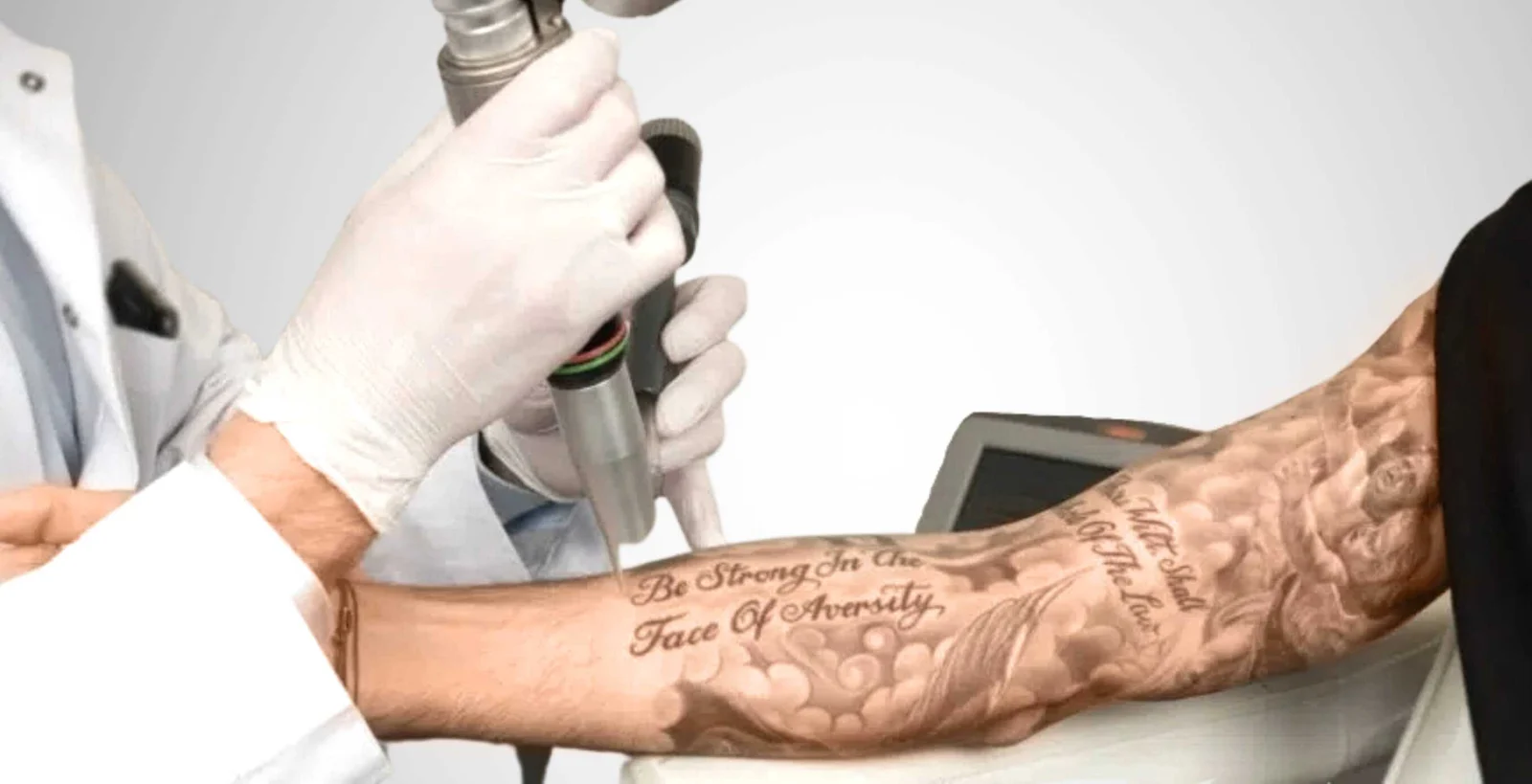
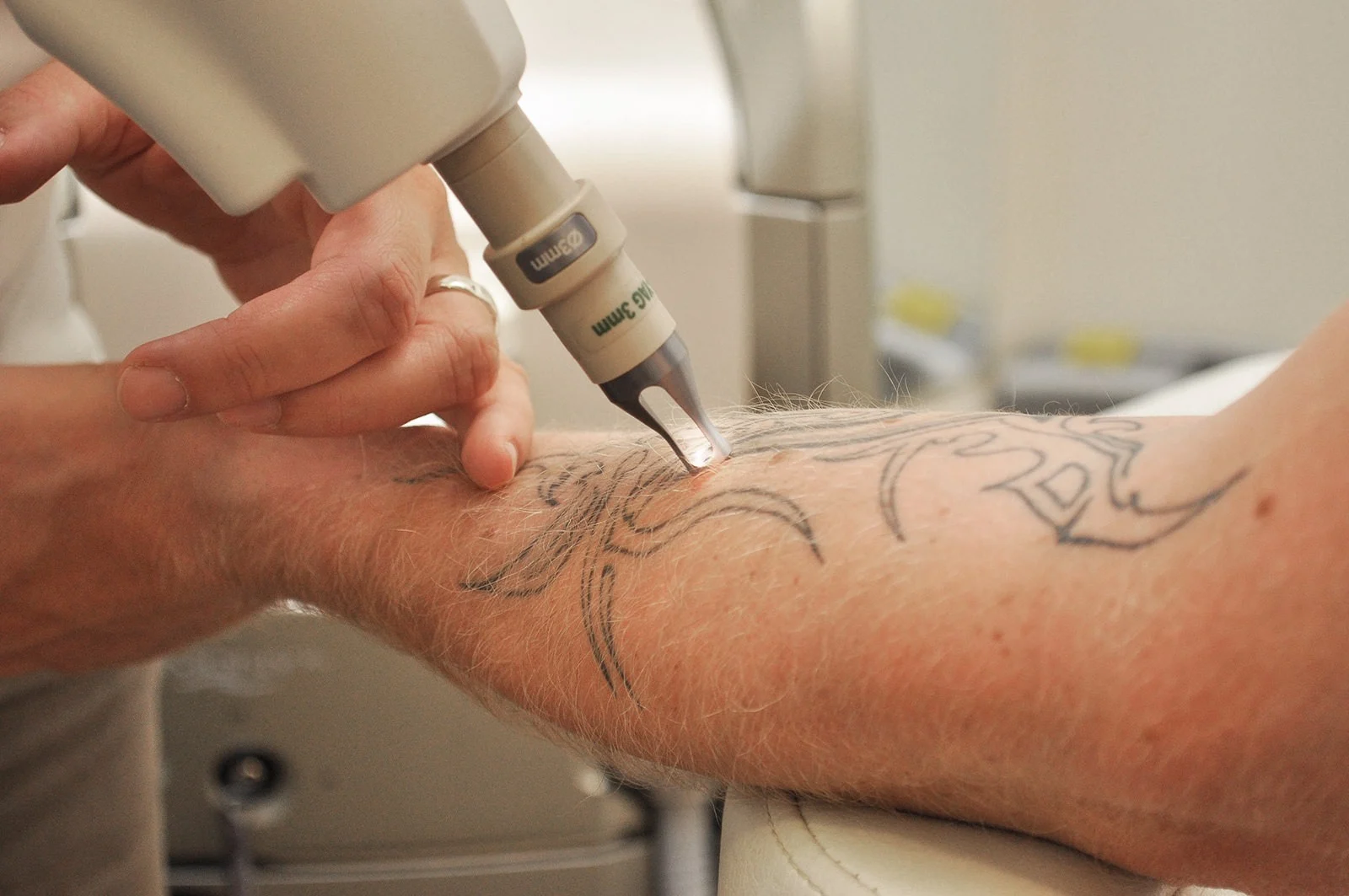
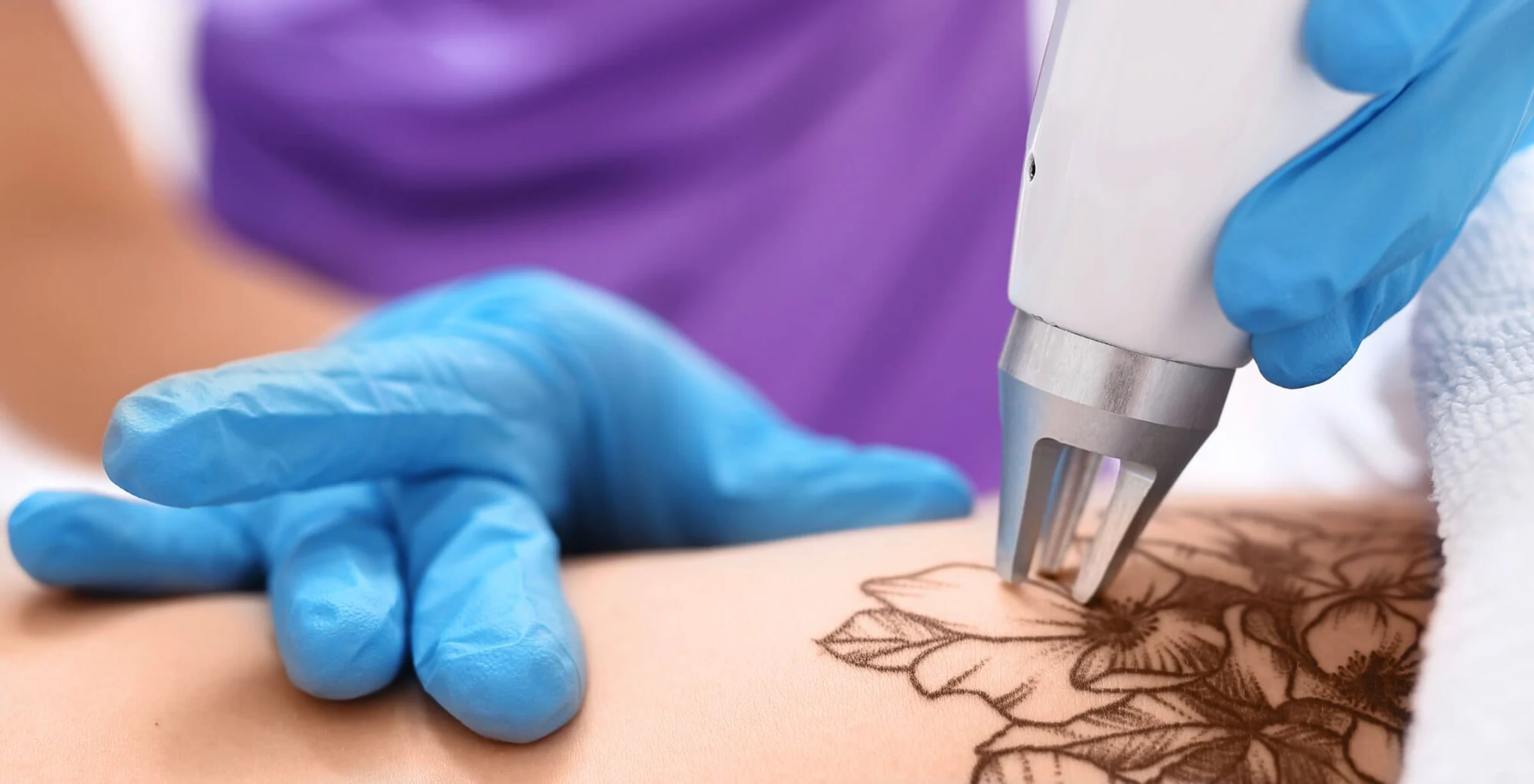
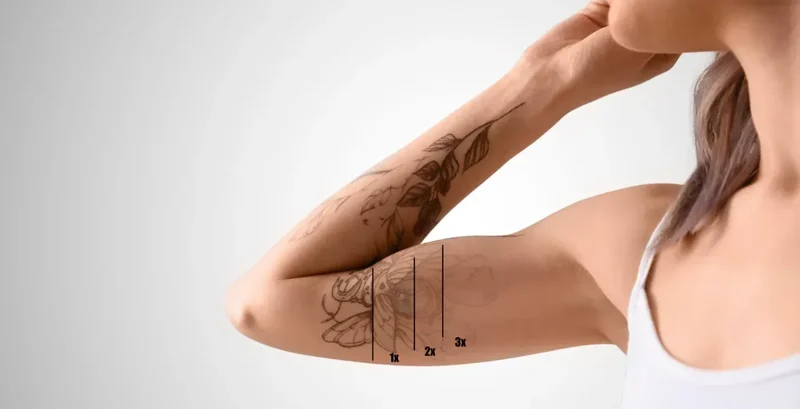
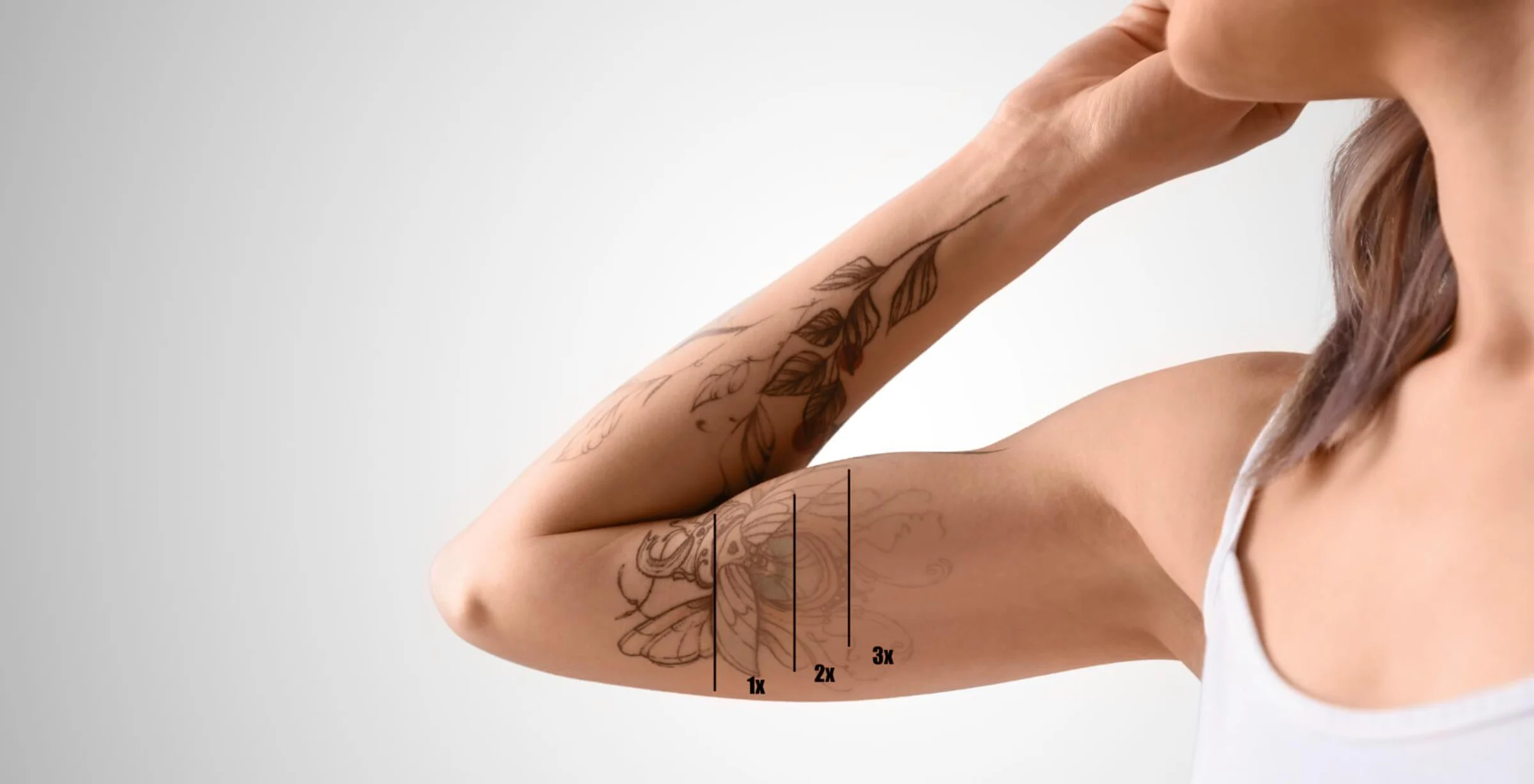
In tattoo removal, highly precise laser energy is used. The laser light penetrates the skin without damaging the surrounding tissue. There it shatters the colour pigments into tiny particles, which are then broken down via the lymphatic system. In this way the tattoo fades step by step, entirely without a scalpel or scarring.
At Dermacare Vienna, the state-of-the-art second-generation PICOPLUS laser is used. It works with extremely short pulses and, compared with conventional devices, enables particularly effective and skin-friendly tattoo removal.
Thanks to this technology, up to 30% fewer sessions are necessary, and even colourful or stubborn colours such as blue or green can be treated successfully.
How long does a single session take?
A single laser treatment is usually surprisingly short: depending on the size and complexity of the tattoo, it generally takes between 5 and 30 minutes. That means the appointment itself takes hardly any time. What matters, however, is not the length of a session but the number of treatments required and the intervals between them.
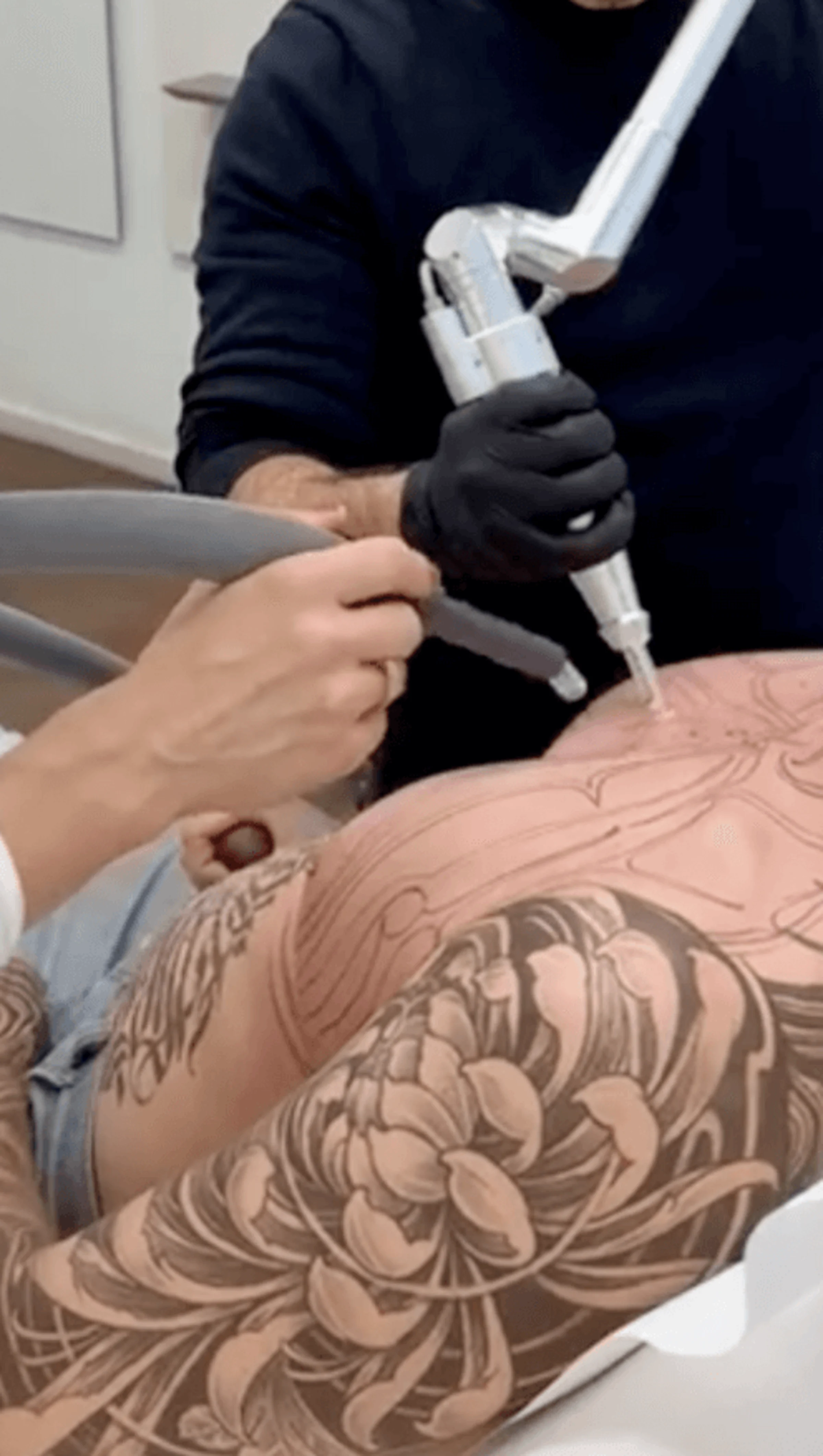
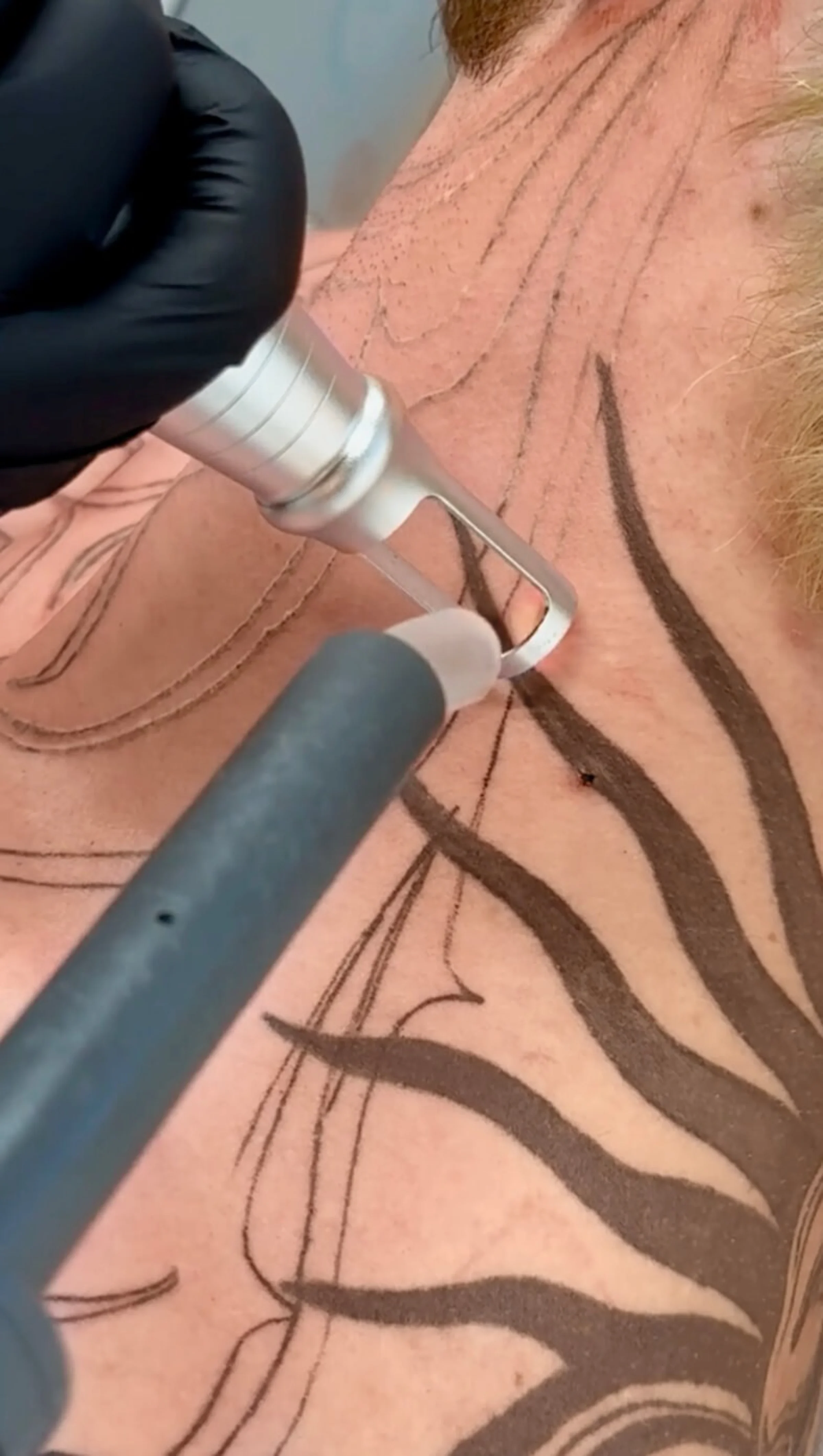
After each session your skin needs time to regenerate. In addition, the body has to remove the shattered pigments step by step. These processes cannot be accelerated, because they depend on your individual metabolism and immune system.
How many sessions are necessary?
The honest answer is: it varies from tattoo to tattoo.
On average you should expect 5 to 10 sessions to have a tattoo removed completely.
- Small, black tattoos: often 4–6 sessions are enough, as black responds best to the laser.
- Larger or colourful tattoos: here 8–12 sessions are usually necessary, depending on how deeply the colour was placed in the skin.
- Cover-up preparation: if you only want to lighten your tattoo so that a new design can be tattooed over it, 1–2 sessions are often enough.
Important: every skin and every tattoo is unique. At Dermacare you therefore receive a personal prognosis as part of a consultation. That way you know in advance what your individual treatment plan will look like.
How much time is there between treatments?
There should be at least 6 to 8 weeks between individual sessions. These intervals are necessary in order to:
- give the skin enough time to heal,
- minimise the risk of irritation or pigmentation disorders,
- give the body the chance to break down the colour pigments completely.
This means: even with a small tattoo, the entire process usually takes several months. For large or multicoloured tattoos it can also take a year or longer until the final result is reached. Patience pays off, however, because in the end there is the return to natural, clean skin.
Which factors influence the duration of tattoo removal?
Not every tattoo can be removed equally quickly. Several factors play a role in how many sessions are necessary and how long the entire process takes.
- Choice of colour: black responds best, light colours such as yellow or green are more stubborn.
- Age of the tattoo: older tattoos can often be removed more easily, as pigments have already been broken down by the body.
- Depth & quality: professionally done tattoos usually sit more evenly in the skin, which makes removal easier.
- Skin type & immune system: a well-functioning metabolism speeds up the breakdown process.
- Aftercare: with the right care after the sessions you support healing and actively contribute to a faster result.
Why Dermacare for laser tattoo removal?
Dermacare has been the leading clinic for tattoo removal in Austria since 2011. The Viennese beauty institute looks back proudly on more than 80,000 successfully performed treatments.
Our patients value not only the state-of-the-art technology but also the personal, medically sound care.
Your benefits at Dermacare:
- State-of-the-art PICOPLUS laser – fewer sessions, better results
- Treatment by experienced doctors and specialists
- Individual prognosis instead of blanket statements
- Test treatment possible to get to know the procedure
- Gentle, scar-free and with the highest precision
Conclusion: how long does it take to have a tattoo lasered off?
Laser tattoo removal is not a process that happens overnight. Even though a session itself takes only a few minutes, the body needs time to break down the pigments bit by bit. With an average of 5 to 10 sessions and breaks of 6 to 8 weeks in between, patience is required – but the result is worth it.
In the end, what many people wish for awaits: natural, tattoo-free skin and the liberating feeling of having freed yourself from an old decision.
Would you like to know how many sessions your tattoo needs? Then arrange a consultation straight away at Dermacare Vienna and let our experts advise you personally.
Frequently asked questions
The number of sessions depends on several factors, including the colour, depth, size and age of the tattoo. The aim is not always complete removal, but sufficient lightening. Often just a few sessions are enough to create an ideal basis for the cover-up tattoo.
Yes, pain can also occur during tattoo removal, depending on the sensitivity of the person and the area. The feeling is roughly comparable to that during tattooing.
Yes. The area can be completely re-tattooed later.